

How To Repair Windlass Anchor
Imtra Learning Centre
Imtra'southward Learning Center is a bang-up resources for everything you lot need to know virtually your boat'due south equipment and systems. Everything from production overviews, product comparisons, buying guides, troubleshooting guides, maintenance tips and more than tin can exist found hither, and it'southward always being updated. Be sure to also check out our video library for production demonstrations, how-tos, webinars and much more than!
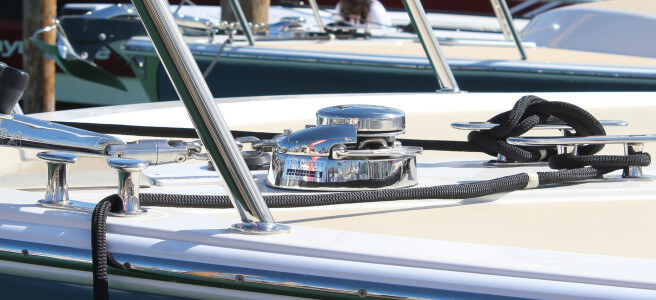
Tips & Tricks for Troubleshooting Your Electric Anchor Windlass
ANCHOR, Anchor WINCH, Ballast WINDLASS, ANCHORING, Boating, CAPSTAN, DIY, LEWMAR, LOFRANS, MAXWELL, MUIR, QUICK, RODE, TROUBLESHOOT, TROUBLESHOOTING | Windlass & Anchoring, Troubleshooting & Maintenance | 0 Comments |
| Return|
As with any piece of marine or electrical equipment, ballast windlasses sometimes fail. Luckily, windlass failures are very rarely catastrophic, and the issue tin often exist diagnosed and repaired simply. This article volition go through the common bug that can ascend with an anchor windlass, then how to diagnose and resolve them.

Issue #i: Your Electrical Anchor Windlass Won't Run in Either Direction
If your windlass motor won't run when it is activated with the control, it means something in the circuit isn't getting power. That could be the control (nuance switch, footswitch, handheld remote, etc.), the solenoid command box, or the windlass motor itself. To determine where the issue is, all you'll need is a voltmeter.
Steps to try
- It'south generally best to start with the simple solutions first. In all electrical windlass installations there should exist a circuit breaker that is designed to trip if the circuit is overloaded to forbid electrical fires. So the showtime thing to cheque is if the breaker has tripped. If information technology's non immediately obvious from the design of the breaker, simply bank check voltage on the input side of the billow, and then the output side. If there'due south good voltage on both sides, the billow is on and functioning.
- Next, take the voltmeter direct to the positive and negative terminals on the windlass motor itself. If no voltage is present, there's likely a break in one of the battery cables that is supplying power. If the voltage is proficient, try running the windlass again with your voltmeter all the same reading the windlass motor. If the voltage drops significantly (less than 9V in a 12V system or less than 19V in a 24V system) then the electric system is not providing enough power to run the windlass motor. This can be caused past insufficient or tuckered batteries, battery cables that are too small in diameter, or a loose or broken connectedness.
- To determine which information technology is, accept the voltmeter to the battery that supplies power to the windlass and run the same voltage exam as to a higher place: attempt to run the windlass with the voltmeter reading the positive and negative terminals on the battery. If the voltage drops at the battery like it did at the motor, then the issue is with the batteries themselves. Either they are undersized or not sufficiently charged. If the voltage is strong at the battery, just dropping at the motor, then the issue is somewhere in the battery cable. It is either too small in bore or at that place is a loose or broken connection. For proper cabling size, refer to the ABYC 10% Voltage Drop tabular array.
- If the voltage is practiced at the battery and the windlass motor, and then the issue is likely in the solenoid control box or the control itself. About electric windlass installations include a solenoid control box that is betwixt the control switch and the motor. Information technology'south generally installed on a bulkhead in the bow area, near the windlass. Locate the control box and check with the voltmeter that ability is passing through the box.
- Activate the command either up or down, and accept the voltmeter attached to the corresponding upwardly or down signal wire coming from the control to the command box, which is generally attached to a small spade terminal, non the larger lugs on the command box. If yous're unsure of the wiring, contact the manufacturer or installer for a wiring diagram. If no voltage is nowadays on the bespeak wire from the control to the control box, and then the event is with the control itself, be it a footswitch, nuance switch or handheld remote.
- If there is a signal coming from the control, check the output of the control box next. This is more often than not the larger lugs on the control box, which hold cables that connect the control box to the windlass motor. Again, test for voltage while trying to run the windlass up or down. If y'all've already determined that the command is outputting a signal to the command box, but the control box is not outputting that same signal to the windlass motor, and so the command box has failed and requires replacing.
Note: if you lot hear repeated clicking from the control box when information technology is activated, that is ofttimes an indicator that the contacts inside information technology accept been damaged over time due to running with insufficient voltage. And so if this is the case, replacing the control box will only be a temporary prepare, and the underlying voltage issues in the battery capacity or cable sizing must besides be addressed.
- If the system passes all of these voltage tests, and the windlass motor still will non run, and then the consequence is internal to the windlass motor and it must exist repaired or replaced.
Upshot #2: Your Electric Anchor Windlass Volition Run in But One Direction
If the windlass motor is running, but merely in one direction, the troubleshooting steps are similar to the steps if information technology isn't running at all. The only deviation is that you lot practice not need to check voltage at the battery or breaker, equally the windlass running in one direction proves that power is nowadays in the circuit. Instead, follow steps iv through 7 above specifically for the direction that the windlass is not running.
Issue #three: Your Electric Windlass Motor is Running simply the Chainwheel Doesn't Plough
If the windlass motor runs, but the windlass isn't deploying or retrieving the ballast rode, the about mutual event is with the clutch aligning. Most windlasses have a clutch adjustment, which when loosened allows the chain to freefall. When loose, the clutch allows the chainwheel to spin independent of the main-shaft which is driven by the motor. Therefore, if the clutch is loose, the motor can run and turn the shaft, but the shaft isn't making contact with the chainwheel to deploy or remember the concatenation.
Steps to try:
- To tighten the clutch, consult the owner's transmission for your specific windlass. On a vertical windlass, there is typically a star-shaped socket that will accept a winch handle that can be used to tighten or loosen the clutch. Exist certain to consult the possessor'southward manual however, as sometimes these clutch adjustments are left-hand threads that can be broken if they are cranked in the wrong direction. On a horizontal windlass, the clutch aligning is unremarkably a wingnut or spiral at the end of the shaft that tin exist tightened or loosened.
- If the clutch adjustment is tight, and the motor is all the same running with no action on the chainwheel, then there is likely a stripped or broken gear internal to the windlass gear box, or broken key and keyways that are causing the motor non to engage with the main-shaft. At that point the windlass should exist disassembled and inspected past a marine mechanic or gunkhole grand.
- If yous're trying to deploy your anchor and the motor is running and making a "clunking" or "clicking" noise and the anchor isn't deploying, it's probable that the chain or rope is tangled or caught inside the anchor locker. Windlasses are designed to not run when at that place is resistance on deployment to avert doing any impairment to the deck or anchor locker. Therefore, if there is resistance caused past a tangle or snag in the anchor locker, the windlass will not power-through the resistance. This is a common issue on sailboats that heel over, causing the chain to tumble within the locker. The same is truthful of boats that just endured rough seas causing the chain pile to fall over itself and become tangled.
Outcome #4: Your Electric Windlass Motor Runs, but not at Full Force
Occasionally after a gunkhole has sabbatum dormant for several months, the windlass labors and lacks the recovery power or speed information technology had in years past. This can be the result of a number of things. It'southward presenting as an electric issue but, don't rule out the possibility of a mechanical problem.
Steps to try:
- Begin by checking voltage at the windlass motor. Depression voltage tin can result in damage to the solenoids and will surely slow the speed of the windlass.
- When a windlass motor operates, the armature rotates and the brushes inside the motor article of clothing down. Brush wear is a irksome process that occurs over seasons of use. Motor brushes can wear to the indicate where they no longer brand the positive contact or they no longer slide smoothly in their carriers. That's an indication to source a new brush prepare from your dealer. This brush wear results in a build up of carbon dust inside the body of the motor. Over time, this carbon dust build-up tin can bear upon the motor'due south performance. Loftier pressure compressed air will help to blow out the carbon dust and may just give that old motor a scrap more ability and speed. Be sure to vesture a mask when blowing out carbon dust, as inhaling it tin can be unsafe.
- Some windlasses crave main-shaft lubrication where they laissez passer through the deck-plate. It'due south not uncommon to see a grease fitting (Zerc plumbing fixtures) at the base of a vertical windlass. Often, a few pumps of grease will lubricate and free up the main-shaft allowing information technology to rotate with less resistance. White lithium grease is recommended.
- If a windlass seal protecting a main-shaft bearing fails, the bearing can get corroded and somewhen seize or fail. Resistance from a declining deck-plate or shaft begetting may irksome and labor the windlass. Eventually, the breaker volition trip only in the early stages of a failure, the windlass may just seem slower than usual. Consult your dealer for replacement begetting and seals. They will often have an exploded parts cartoon to assist you in dis-associates process.
Concluding Thoughts
These troubleshooting steps cover the most mutual problems that arise with electric anchor windlasses, but of course they are not exhaustive. At that place are other less common failures and issues that tin ascend, and if that is the case be sure to consult an expert.
To avoid mutual windlass failures, be certain to bank check out our 7 Tips for Annual Maintenance of Your Ballast Windlass, or feel costless to contact u.s.a. direct to speak with i of our experts.

Related Articles
- How to Choose the Best Ballast Rode for Your Gunkhole
- Tips for Troubleshooting an Electric Anchor Windlass
- How to Choose the Right Anchor Windlass
- How To Install a New Ballast Windlass
- seven Tips for Almanac Maintenance of Your Anchor Windlass
Related Products:
-
Project m/X2, Low Profile, 12v/1000w Chrome, v/sixteen" Gypsy
- Windlass Switchgear Kit: Control Box + Hard disk Footswitches
- Watertight Solenoid Control Box, 12V, 500-1700W, 3 Term
- 2-Function (Up/Down) Hand Held Remote Control 7' Screw String
About the Author
Related

Source: https://www.imtra.com/learning-center/articleid/46/windlass-troubleshooting
Posted by: leglerhenceld.blogspot.com
0 Response to "How To Repair Windlass Anchor"
Post a Comment