

LG 75QNED99 mini-LED 8K TV Review
Verdict

While the lack of VRR support for gamers and, especially, the sudden backlight bug during very dark HDR movie scenes toll the TV a mark, LG's debut 8K QNED TV puts the brand's LCD TVs on the high-end map like never before.
Pros
- Oft stellar pic quality
- Groundbreaking black levels for IPS
- Good audio quality
Cons
- Some backlight issues with the darkest scenes
- No VRR support
- Expensive versus 4K TVs
Key Features
- Native 8K resolution 8K TVs carry native pixel counts of 7680 10 iv,320 – 4 times as many pixels every bit 4K TVs
- Mini LED lighting The backlight uses much smaller LEDs than regular LED TVs, so that more than of them tin can be fitted to deliver much more local low-cal control
- WebOS 6.0 The much-changed version of LG's much loved smart Goggle box Os.
- 4K/120Hz and ALLM gaming support Supports gaming at 4K resolutions and 120Hz frame rates, and can automatically switch the Idiot box into and out of its Game mode
Introduction
While the 75QNED99 is far from the only high-end LCD TV LG has made, information technology's arguably the first 1 that might just take what information technology takes to exist mentioned in the same breath by discerning AV enthusiasts as the brand's legendary OLED sets.
The reason for this is that it uses the new Mini LED technology sweeping the premium LCD Tv set world this year. Equally its name suggests, this involves lighting the screen using much larger numbers of much smaller LEDs.
This is non an entirely new thought; TCL started shipping Mini LED TVs in the U.s.a. in 2019. Only it's only this year that the technology has 'gone viral'. And as nosotros'll see, information technology arguably benefits LG's LCD TVs more than those of any other make.
Availability
- Great britain RRP: £5999
- USA RRP: $4999
- Europe RRP: €6499
- Canada RRP: CA$6999.99
- Australia RRP: AU$7799
The 75QNED99 is widely bachelor beyond the Great britain and Europe at present, and is expected to launch in the U.s. past end of August. Information technology typically costs £5999 in the Uk, $4,999 in the US and around €half-dozen,499 in Europe.
This is a pretty hefty price by today's standards. Y'all can get LG'due south own 77-inch 77C1 OLED Tv for simply £three,600 at the time of writing, subsequently all.
Notwithstanding, the 75QNED99 is 8K while the C1 OLED is 4K, and is also on a par than Samsung's flagship 8K Mini LED Telly for 2021, the QE75QN900A (in fact, the Samsung was a thousand more expensive prior to receiving a recent price cut).
Blueprint
- Crescent-shaped desktop stand
- Slender contour and narrow frame
- 'Difficult' IPS screen with wide viewing angle support
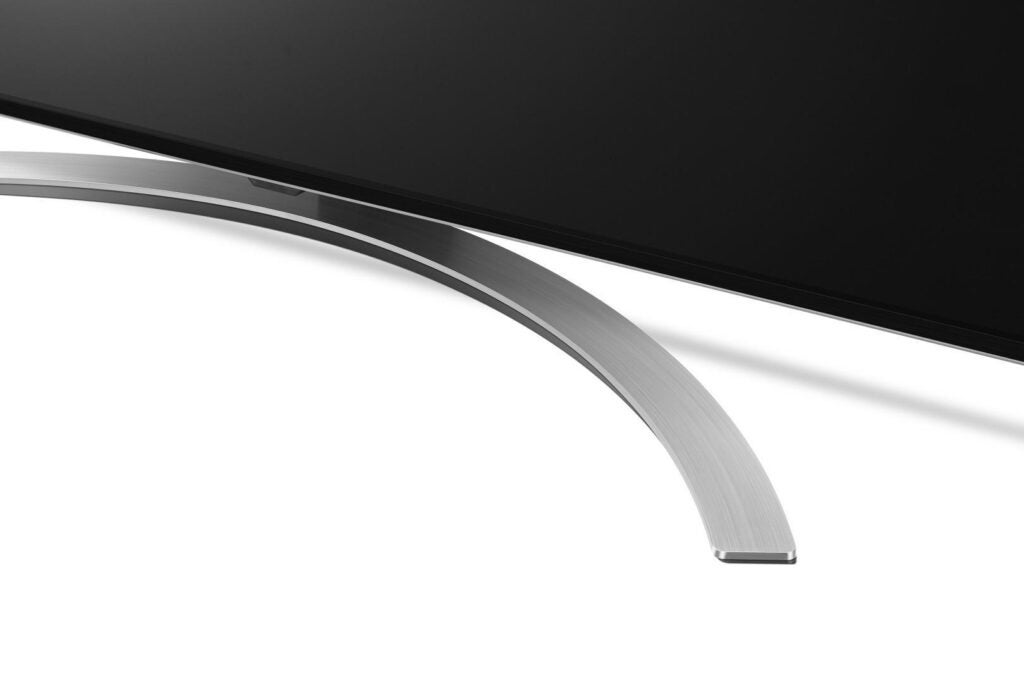
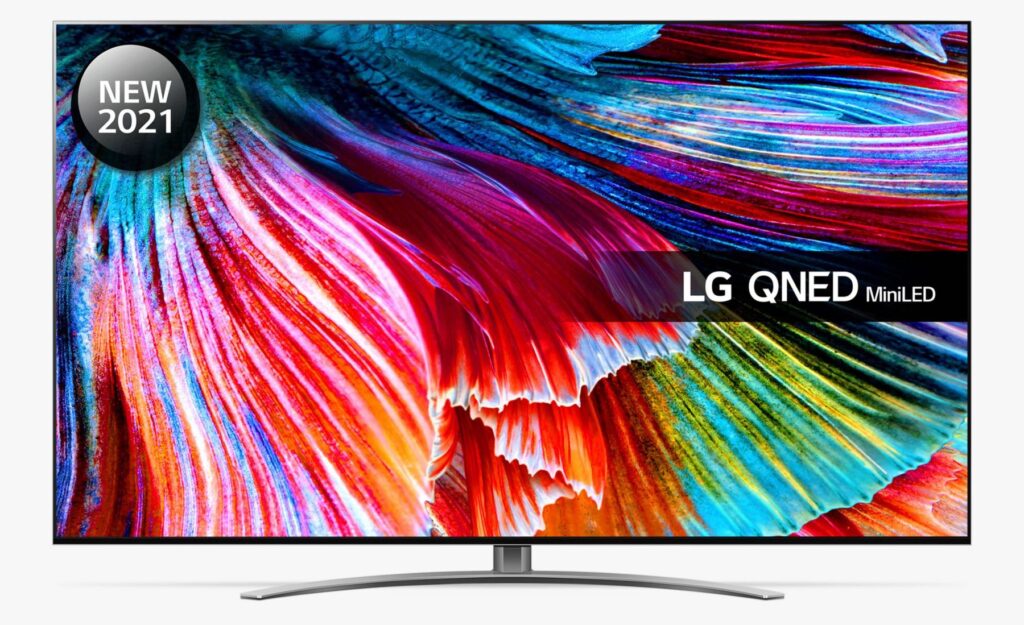
The 75QNED99 isn't quite every bit robustly built equally some of the flagship TVs we see these days – including LG's OLED models. Nor is it much of a show off, taking a less is more approach with its super-thin frame and elegant crescent stand. I suspect this will actually suit many potential buyers only fine, though.
The set is also impressively trim circular the back, despite using a directly lighting arrangement that positions its LEDs behind the screen rather than around its edges. This, presumably, is a benefit of the switch to Mini LEDs.
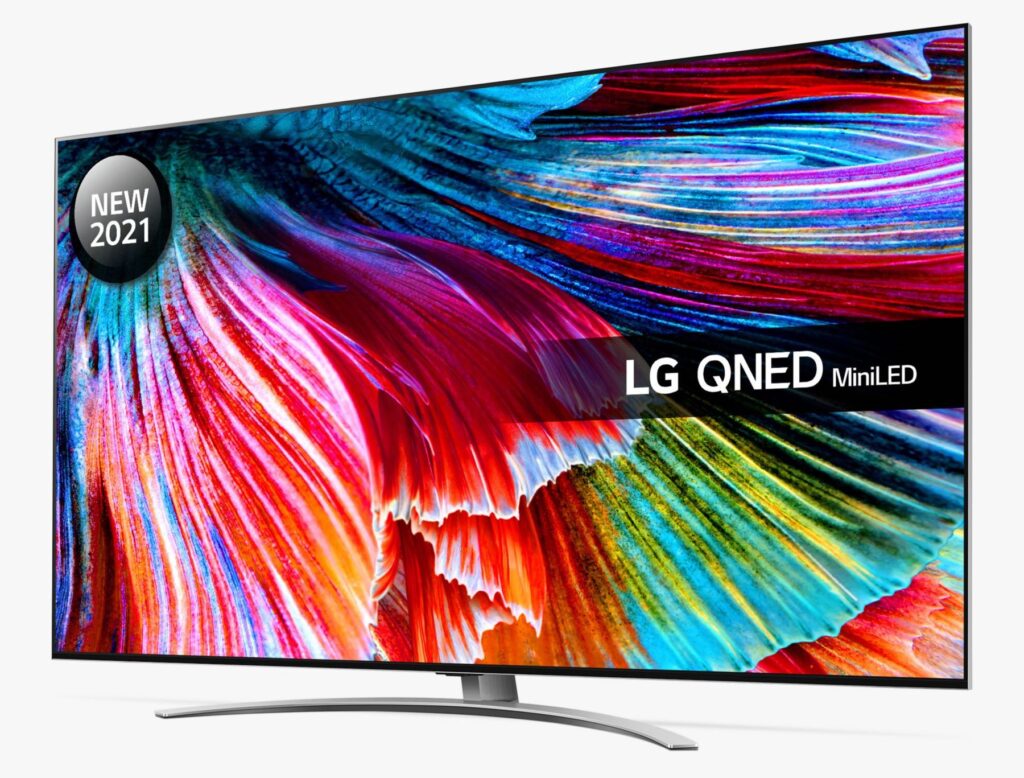
Similar pretty much all LG LCD TVs, the 75QNED99 uses an IPS console. This means information technology can support wider viewing angles than most TVs that use the alternative VA panel. The IPS console would also usually mean, though, that it struggles when it comes to handling dark scenes and contrast – but maybe the Mini LED technology will have something to say about this.
Features
- Native 8K resolution
- Mini LED technology with local dimming
- Nanocell color technology
The 75QNED99'due south features read like a checklist of all the most important cutting border features currently sweeping the Tv set world.
For starters, it sports a native pixel count of 7680 ten 4320, making information technology an 8K rather than 4K TV. This may be controversial for some; why bother with an 8K Tv set when aside from a few YouTube videos native 8K content is practically non-existent?
There are a few more 8K sources supposedly in the pipeline (though they've been stuck in that pipage for quite some time now). Probably the primary reason to consider an 8K TV at present, though, is that provided its image processing is proficient enough, it can increment the dots per inch with which 4K sources are presented, making pictures look more three-dimensional and 'real'.
In the 75QNED99'southward case, the upscaling organisation comes courtesy of LG's new, AI-toting Alpha nine Gen 4 processing engine. This is the same processor nosotros've already seen working to dandy issue on LG's 2021 OLED TVs – though optimised for LCD screens, of class.
The miserable upscaling often witnessed with early HD TVs dorsum in the day has definitely not continued into the 8K world, despite the awe-inspiring volume of actress pixels the 75QNED99 is having to 'calculate'. Unless, anyhow, you're trying to sentinel grubby, heavily compressed standard definition sources – which surely yous will be trying to practice as little as possible if you've spent large on an 8K TV.
Much more significant than the 8K pixel count, it turns out, is the 75QNED99'south Mini LED lighting. Especially as it partners its much smaller LEDs with a large number of local dimming zones. These proved then numerous, in fact, that I couldn't count them. I'd be surprised, though, if there aren't comfortably more a thousand, and maybe something approaching two thousand.
This extreme local dimming situation (versus anything we've seen earlier from LG) actually reveals the truthful attraction of Mini LED. Having more than smaller lights to work with only gets y'all so far in picture quality terms; Mini LED simply gets truly exciting when y'all start to command all those LEDs down to a much more localised level than was possible before.
The 75QNED99'due south IPS panel isn't driven as brightly every bit most flagship VA TVs. Taking a brightness reading from a white HDR window occupying 10% of an otherwise black screen, the 75QNED99 tops out at around 1180 nits. This is beyond OLED's current capabilities, crucially, only some way brusk of the 1500 nits and (in 1 or 2 cases, essentially) more some 8K LCD rivals tin muster.
Color comes courtesy of LG'due south Nanocell system. This introduces special particles into the panel that absorb unwanted calorie-free, resulting in refined wavelengths that in plough deliver richer, more than authentic and more than subtly delineated colours.
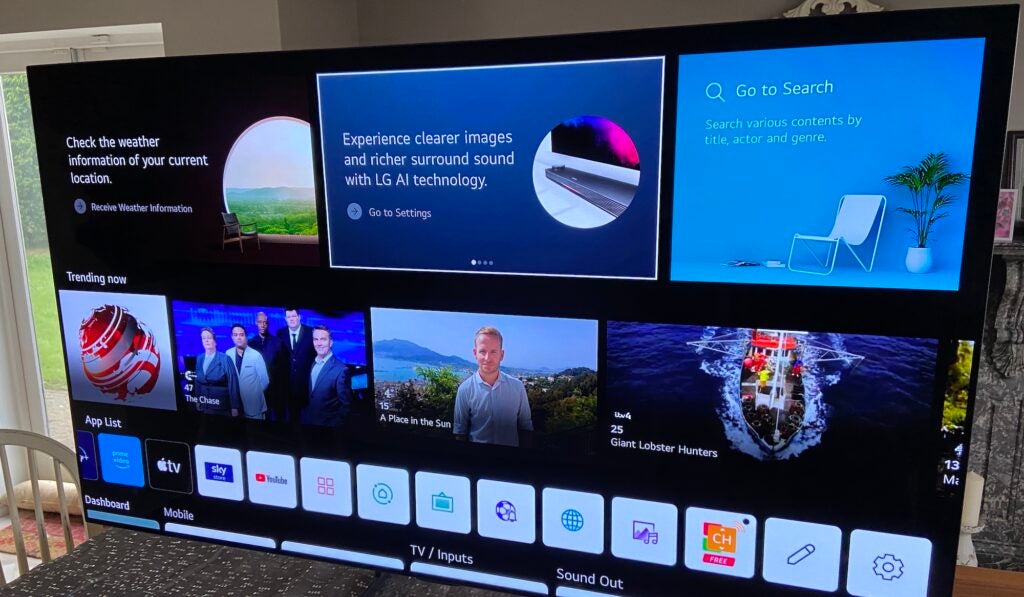
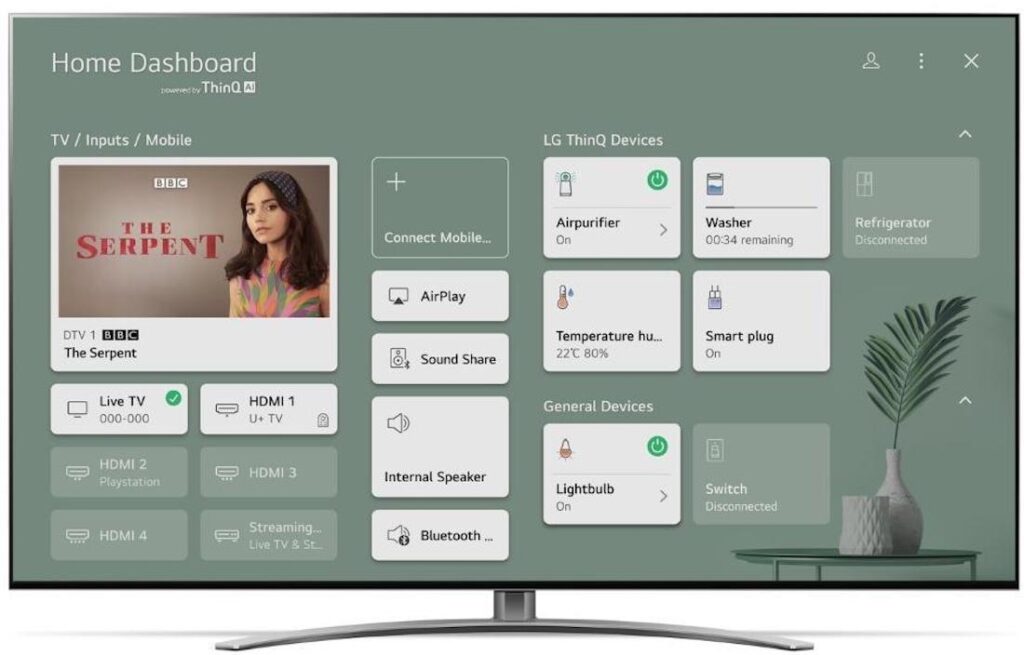
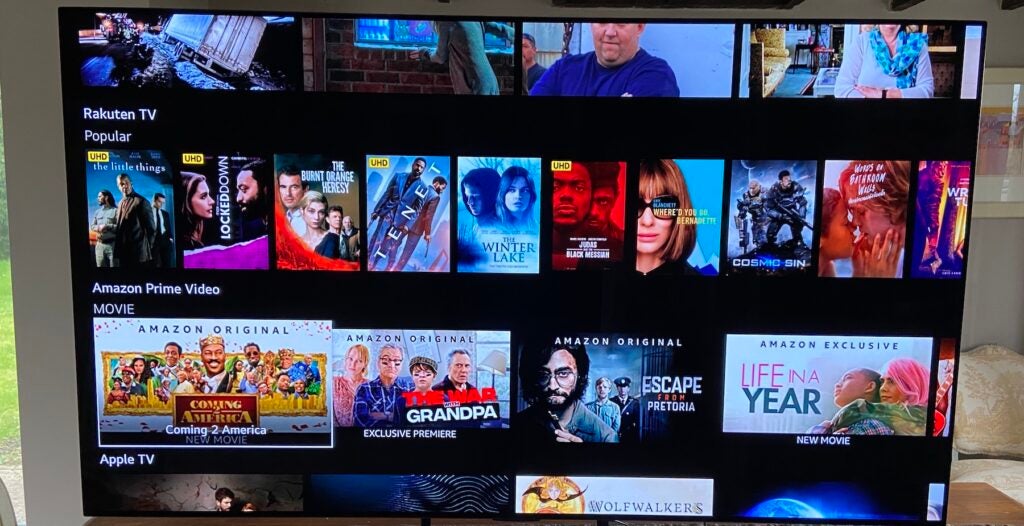
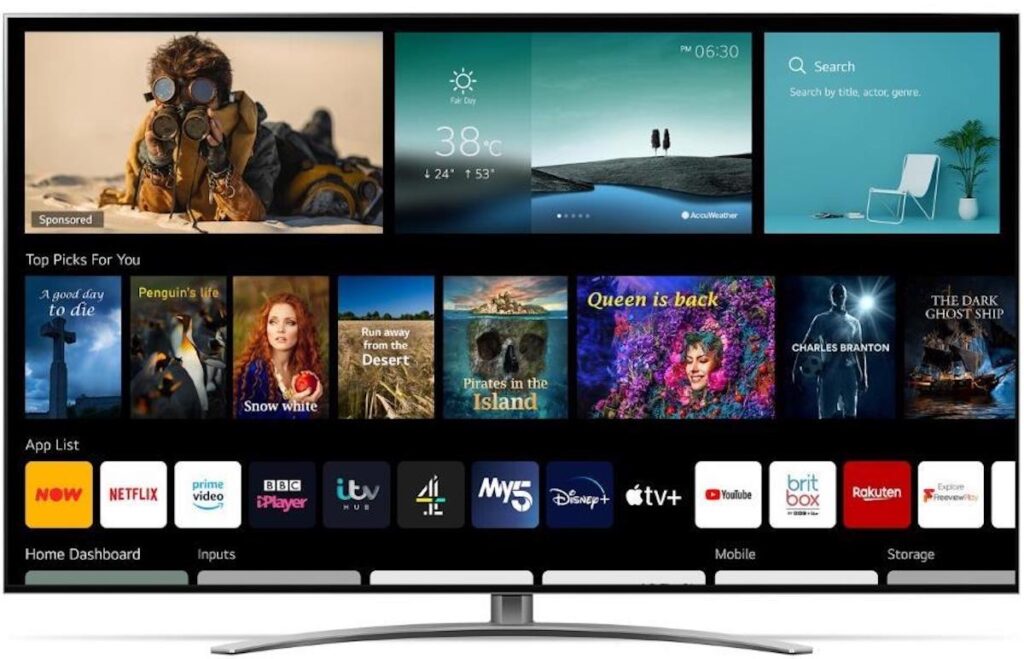
The 75QNED99's smart features are provided by LG'southward new webOS vi.0 organization. This represents the first actually big shift in webOS we've seen since the award-winning interface was first introduced. And actually, surprisingly, it'southward not an entirely unmitigated success.
The virtually controversial motion, for me, is the shift to a total-screen home screen, rather than the erstwhile horizontal bill of fare 'strip' superimposed along the lesser of the screen. Going total screen does enable LG to provide more content links and options in 1 striking, but it also means yous tin can't keep watching TV as yous browse, too as making the menus expect more potentially overwhelming and complicated to smart Tv set newbies.
WebOS 6.0 doesn't feel like information technology's making the most effective utilise of some of the prime existent estate spots on the new home screen, either, and it'due south a compassion that scrolling down from the home screen merely takes you to surprisingly express and impossible to reorganise prepare of 'shelves' devoted to specific video streaming apps.
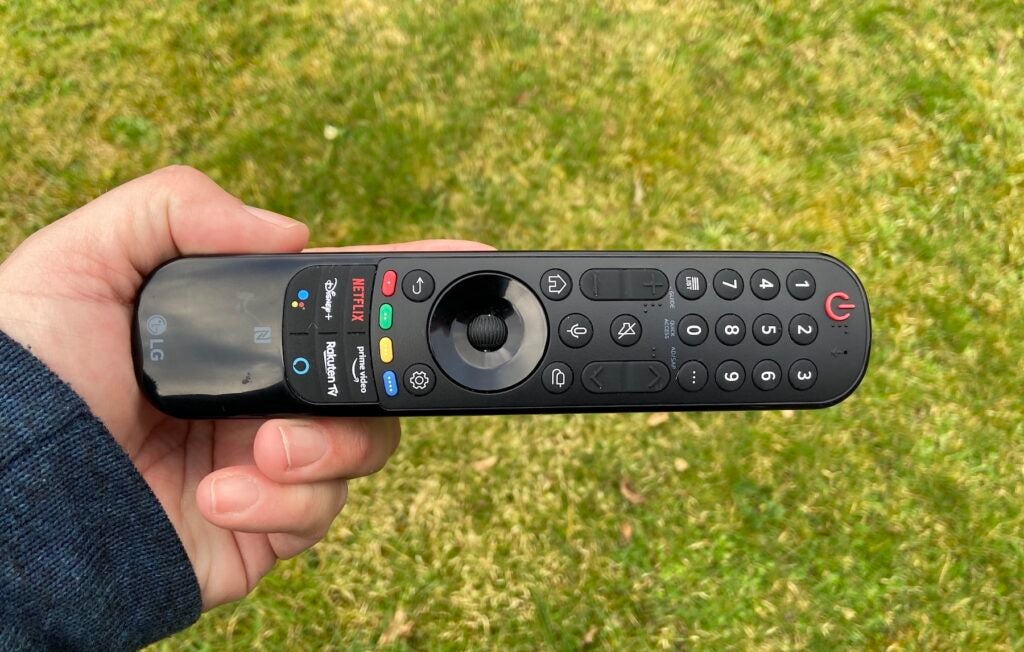
There are some expert things too, though. The new content search feature is superbly comprehensive and well represented. The new interface'south focus on highlighting recommended content based on analysis of your viewing habits becomes increasingly welcome (subsequently an inevitably rather 'random' start) over time. Vocalisation recognition and control is effective, and the new Magic remote design is both more than comfortable to hold and less demanding to use, while retaining the unique 'betoken and click' functionality that's served LG so well for and so long.
The 75QNED99 supports three of the big four HDR formats: HDR10, HLG and Dolby Vision. Every bit e'er with LG, though, there'south no support for the HDR10+ format which, like Dolby Vision, adds extra scene by scene data to the HDR stream that uniform TVs tin take advantage of. There is far less content out there mastered in HDR10+ than there is Dolby Vision, but it's withal a shame LG doesn't back up both 'active' HDR formats when TVs from the likes of Philips and Panasonic exercise.
The 75QNED99'southward connectivity, finally, is a surprisingly mixed handbag. At that place are four HDMI ports, all of which support both 4K at 120Hz and 8K at 60Hz. Notwithstanding, there's no support for variable refresh rates. This is very surprising for such a premium Television from LG, of all brands.
Picture quality
- First-class blackness levels
- Impressive upscaling abilities
- Can experience some backlight issues
Despite its viewing angle reward, its limitations with contrast and black levels have meant that I oasis't typically been a fan of LG's IPS LCD Telly technology. The introduction of Mini LED, however, revolutionises what IPS is capable of.
The manner fade to blacks go pretty much perfectly black, for example, with no trace of underlying greyness, is totally unprecedented for IPS applied science. In fact, the results are essentially indistinguishable from what the very best VA panels can reach. This full blackness is achieved, besides, without the distracting 'switching the whole backlight off' trick LCD TVs sometimes resort to in a bid to achieve total screen darkness.
Blackness levels continue to be spectacular with night scenes (as opposed to full fades to black), with the 75QNED99 typically managing to combine really bright objects with extremely dark areas in the same shot while generating practically no sign of backlight clouding/blooming that'due south usually such an IPS issue.
In fact, for some of the time, at least, the 75QNED99 fares fifty-fifty better than Samsung'due south 75QN900A when it comes to reproducing bright and dark content in the same shot. Chiefly because it doesn't dim downwardly the effulgence of objects that appear against very dark backgrounds as much as the Samsung set does with its about attractive picture presets. Information technology'south hard to imagine a amend example of the benefits Mini LED technology can bring than seeing the sort of clouding-costless contrast the 75QNED99 tin evangelize from an IPS panel.
Having said all this, there are a couple of riders to the 75QNED99'southward contrast talents that I'll come back to later.
The combination of the 75QNED99's impressively consistent brightness output and the joys of Mini LED/advanced local dimming helps LG's new 8K set retain impressive amounts of subtle detail in nighttime corners of HDR pictures, too. Another thing that's not always been the case with LG LCD TVs.
In fact, the 75QNED99'due south sharpness and particular is generally excellent. Native 8K demo reel footage delivers all the advantages I'd expect when it comes to immediacy, realism, 3-dimensionality and depth of field, while also looking phenomenally pure and detailed.
Upscaling of 4K sources is mostly groovy also. Particularly when it comes to how natural the upscaled images look. LG'due south processor does an outstanding of adding in the necessary tens of millions of actress pixels without causing really whatever obvious unwanted processing side effects. Source racket is expertly excised from the upscaled picture; the sort of fizzing noise that can touch areas of peculiarly fine texture with some rival TVs is non-existent; grain is maintained without being exaggerated; and there'due south no sense of exaggerated object edging or extra motion lag.
In fact, motion on the 75QNED99 is virtually every bit much of a success story as it is on LG'due south 2021 OLED TVs, with the new Cinematic Move setting once more calming the worst aspects of panel judder and movement mistiness/lag without causing the picture to look processed or over-smoothed.
The 75QNED99'due south upscaling doesn't deliver pictures as sharp and detailed looking every bit the upscaled images of rival 8K TVs from Sony and, especially, Samsung – even with LG'southward impressive AI Picture Pro processing in play.
But then in Samsung's case the extra sharpness can be accompanied by unwanted side furnishings/dissonance. And if you utilise the most 'accurate' Movie or Filmmaker Way picture presets on a new Samsung 8K TV, while this racket reduces, the sharpness levels of upscaled content end up looking pretty close to those of the 75QNED99.
It'south worth noting, as well, that even HD sources are watchable – most enjoyable, even! – on the 75QNED99. This has not been the example with every 8K TV I've seen, simply it's pretty handy given that really, sadly, most of u.s. still spend near of our fourth dimension watching Hard disk.
The 75QNED99's colour performance is almost as startling every bit its Mini LED-inspired contrast. I've long been a fan of the combination of richness, subtlety and naturalism associated with LG'due south Nanocell colour organization, and this continues with LG'due south new 8K hero. The results are images, peculiarly with HDR/wide colour gamut sources, that frequently look really breathtakingly immersive, realistic and, for desire of a better word, beautiful.
The exceptional color refinement helps sell the screen's ultra-high resolution too, and considering there's so much less backlight clouding to worry nigh on the 75QNED99 compared with previous LG LCD TVs, colour saturations are able to maintain much more than consistency between scenes and right across the screen.
The 75QNED99 might non measure as bright as some of its loftier-end LCD rivals, only it makes the most of what it'due south got. Impressive dynamic tone mapping ensures areas of elevation brightness even so wait satisfyingly intense, and the baseline effulgence of the image remains extremely consistent, leading to an impressively even and therefore immersive experience.
One concluding high point in the 75QNED99's film armory is its gaming functioning. Something nigh the TV'south combination of Nanocell color, pristine processing, tone mapping, light control and sharpness works wonders with game graphics – especially with native 4K HDR titles.
Assassin's Creed Valhalla, for instance, has never looked better on any TV I've played information technology on. The screen'south impressive 15.7ms response time in Game mode keeps the action feeling tight and reactive, too. The but issues are that dark areas in games with specially ambitious HDR, such as Phone call Of Duty Black Ops: Cold State of war, can go slightly grey, and that there isn't any VRR support to eke out that last bit of purity and functioning from games that don't deliver constant frame rates.
While the 75QNED99's pictures deliver a huge advance on whatsoever previous LG LCD and frequently look nothing short of jaw-droppingly good, they're not perfect. And the biggest issue yet seems to chronicle to the screen's IPS console, for while virtually nighttime scenes look gangbusters versus any previous IPS panel, a few especially nighttime ones cause some backlight headaches.
Throughout the sequence in 1917 on 4K Blu-ray where Corporal Schofield wakes upwards in almost full darkness later on being knocked unconscious on a stairwell, for case, the backlight goes through some very distracting behaviour equally the local dimming organization wrestles with the content'due south nearly-blackness and constantly shifting light levels.
Some parts of the pic get completely and unnaturally 'total black', losing detail in the procedure, while elsewhere the picture of a sudden and surprisingly breaks down into quite large and defined areas of backlight bloom. Put these 2 extremes together on the same screen and the sequence becomes actually quite hard to watch every bit the hyperactivity of the backlight becomes almost all you can come across.
Mercifully, scenes every bit dark and difficult as this i are pretty rare – though information technology was non the only scene I came across during my tests that presented at least one or two of the backlight bug and so axiomatic in the 1917 sequence.
The only fox I plant that substantially reduced the blooming (merely non the forced, hollowed out look to the very darkest areas) was turning off the dynamic tone mapping. But this requires yous to consume a pretty substantial reduction in the full general brightness of HDR content.
Backlight blooming also becomes much more than apparent if you have to watch the 75QNED99 from much of an angle, undermining the wide viewing angle credentials of its IPS panel, and there can be some slight shadow detail loss in dark areas with standard dynamic range images and some of the Dolby Vision presets.
Audio quality
- Expert dialogue reproduction
- Not the most dynamic with Atmos content
The 75QNED99's in many means ground-breaking pictures are joined by a typically bodacious LG audio functioning.
Starting in Dolby Atmos mode, the speakers evangelize an impressively large sound stage that spreads comfortably across the side and top edges of the screen. The 75QNED99 is more than constructive in this respect, in fact, than the Dolby Atmos modes of any recent LG OLED TVs.
Dialogue sounds richer and more powerful than it does on LG'south current OLED TVs also, and the audio stage avoids that sense of only appearing to be behind the screen that you oft hear with TVs that utilize rear mounted speakers. The projection is more sideways than forward, perhaps, but the outcome still feels reasonably direct and dialogue feels like it's coming from the onscreen action.
The speakers don't sound harsh with shrill trebles, while at the other end of the audio spectrum the 75QNED99 can produce impressive amounts of bass without the speakers starting to buzz or the drivers dropping out when the going gets actually tough.
The ane area where the 75QNED99 falls short with Dolby Atmos is its commitment of really dense, climactic moments. Simply when you expect the sound to really let rip, the speakers really seem to get into self-preservation fashion, really withdrawing rather than opening upward.
Oddly this does non happen if you lot play an activity pic with a DTS soundtrack, suggesting that the outcome is more than to do with the implementation of Dolby Atmos rather than limitations in the TV's speakers.
Replacing the Dolby Atmos decoding with the 75QNED99'south AI Audio Pro mode sees the set delivering a much louder, denser, more dynamic and more satisfying soundstage that does manage to grow with big audio moments rather than bankroll off. In fact, the AI Sound Pro mode can exist overly aggressive at times, causing the loudest moments to become a little too dumbo and harsh.
Despite its niggles, though, information technology's important to conclude by saying that the 75QNED99 remains a pretty course audio act by regular TV standards.
Latest deals
Should you purchase information technology?
You want more than HDR brightness than OLED can give yous. The 75QNED99'south Mini LED lighting produces more peak and consistent total-screen brightness than the brands OLED TVs can accomplish – which plays very nicely with HDR images.
You watch a lot of very dark stuff! While the motility to Mini LED lighting has transformed the sort of contrast you might now look of LG's LCD TVs, very dark scenes can still cause some distracting backlight issues.
Concluding Thoughts
For the vast bulk of its 24-hour interval-to-solar day life, the 75QNED99 is a fantastic TV. Introducing Mini LED and thousands of dimming zones delivers the sort of spectacular contrast functioning I'd honestly never expected to see from an LCD screen. LG's NanoCell engineering combines with this new contrast performance and a good corporeality of brightness to beautifully rich but refined effect. And fine details and sharpness are outstanding thank you to the screen's native 8K resolution and LG'south latest much-improved move and upscaling processing.
Samsung'due south 75QN900A 8K Tv is capable of substantially more peak brightness and suffers much less with backlight distractions during very nighttime scenes than the 75QNED99. It isn't equally consistent with its brightness, though.
Another choice, of course, is to forego 8K and get for 1 of LG's 4K QNED TVs, which costs roughly half every bit much as their 8K siblings. Though it'due south important to note that these TVs benefit from fewer local dimming zones, and only get LG's less powerful Alpha vii Gen 4 video processor rather than the Alpha ix arrangement found in the QNED99s.
Finally, if you're willing to forego the 8K resolution and some HDR-friendly effulgence, LG's 77-inch OLED77G1 OLED TV is available for £4,500. LG's 8K OLED TVs remain prohibitively expensive, though; the upcoming new OLED77Z19, for example, is scheduled to sell for £20k!
How we test
We test every Idiot box we review thoroughly over an extended period of time. Nosotros utilise industry standard tests to compare features properly. Nosotros'll always tell you what we notice. We never, e'er, accept money to review a product.
Used as the principal Telly for the review period
Tested for more than a calendar week
Tested using manufacture calibrated tools, discs and with real earth use
Tested with broadcast content (HD/SD), video streams and demo discs
Yous might like…
FAQs
What is a QNED TV?
This is LG's name for TVs that use Mini LED backlighting to provide more backlight precision.
Are 8K TVs resolution necessary?
At that place isn't much native 8K content at the moment – only a few YouTube videos in well-nigh territories. More is being promised for the time to come, but there isn't likely to exist much more for some time, in truth. The best 8K TVs, though, use excellent new AI-based upscaling to convert 4K into 8K surprisingly effectively.
What cut border gaming features does the 75QNED99 support?
You can play at 4K resolution in 120Hz frame rates, and the set up can automatically switch between its Game and other motion picture presets thanks to its support for the HDMI 2.1 'ALLM' feature. There's no variable refresh rate support, though.
Trusted Reviews examination data
‹
Input lag (ms)
Peak brightness (nits) x%
›
Full specs
‹
Great britain RRP
United states of america RRP
Eu RRP
CA RRP
AUD RRP
Manufacturer
Screen Size
Size (Dimensions)
Size (Dimensions without stand)
Weight
ASIN
Release Date
First Reviewed Date
Model Number
Resolution
HDR
Types of HDR
Refresh Charge per unit TVs
Ports
HDMI (ii.1)
Audio (Power output)
Connectivity
Display Applied science
›

Source: https://www.trustedreviews.com/reviews/lg-75qned99
Posted by: leglerhenceld.blogspot.com
0 Response to "LG 75QNED99 mini-LED 8K TV Review"
Post a Comment